
Oud Lis
A story from Egypt without an obvious monster

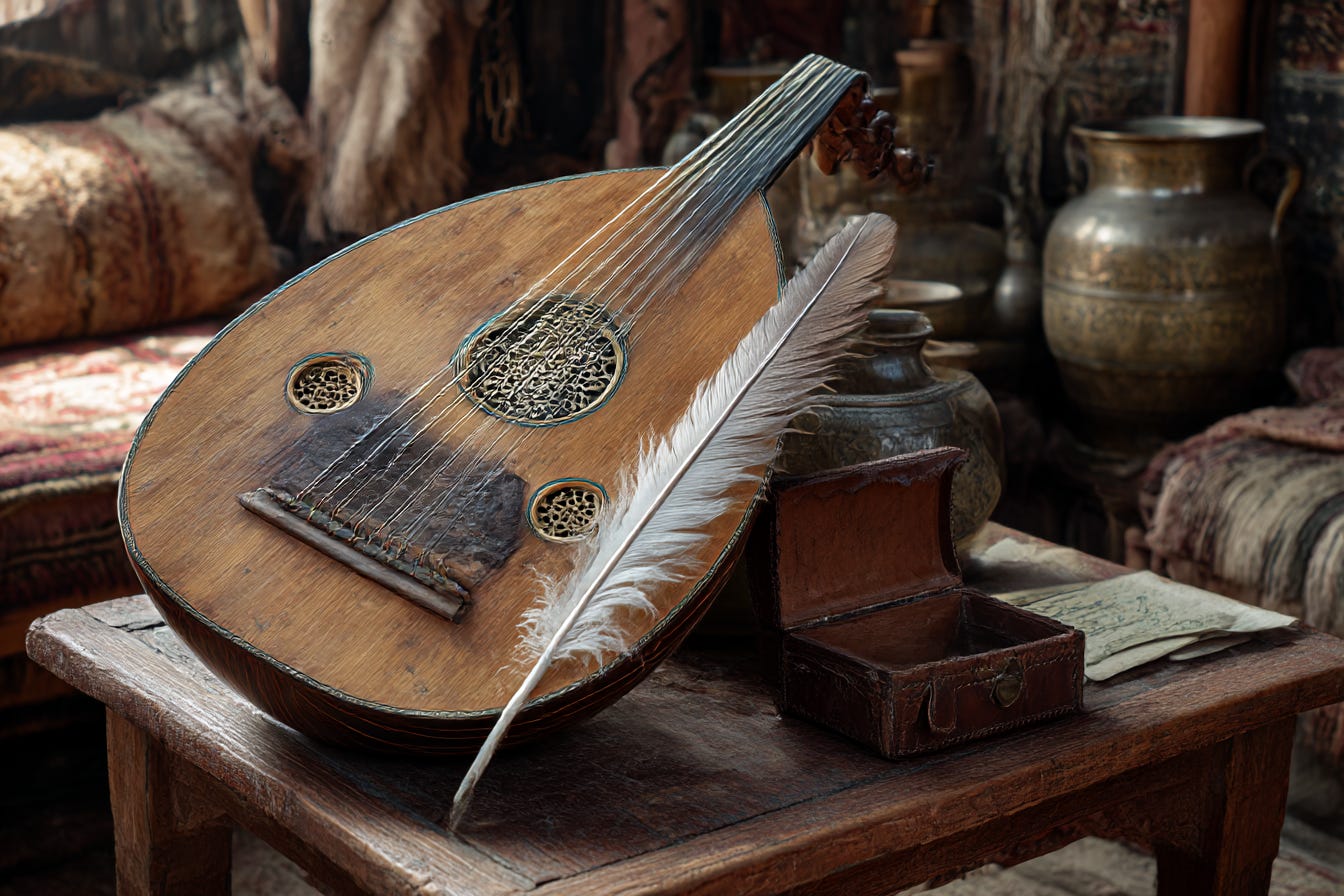
There was, or there was not, in the oldness of time, a King with three daughters. When the season of war arrived, he gathered his family to ask what trophies he should bring home to mark his victory. The eldest daughter, eyes gleaming, asked for a brooch of purest gold. The middle daughter dreamily asked for a gown of shimmering silk. But the youngest shook her head. “I want only for you to come home safely, Father,” she said.
The King’s face reddened with anger. “A King’s daughter cannot ask for nothing. Think for three days, or I shall leave in anger.”
The princess retreated to the garden, troubled by the weight of a choice she didn’t want to make. Suddenly, an old woman appeared from the shadows. “Do not weep, child,” the woman whispered. “When your father asks again, tell him you desire only the Oud Lis.”
The princess did as she was told, though she had no idea what Oud Lis meant. The King, also ignorant of its meaning, agreed and went to war. He won his battles and filled his ships with spoils, but as he sailed home, the winds died and the sea became like glass. The ship would not move. An old sailor approached the King: “Sire, have you forgotten a promise?”
The King remembered the Oud Lis. He went ashore to a bustling port and sought a wise man, who laughed softly. “The Oud Lis belongs to the King of the North. Perhaps you can convince him to give it to you.” Still, the King did not know what it was.
When the King of the North realized the visiting King did not know its meaning, he gave him a small wooden box. The visiting King asked him what it was; the King of the North told him that if his daughter did not know, he needn’t be concerned.

When the King returned, the sisters snatched up their jewels and silks, but the youngest took her small, plain box to her chamber and set it aside. Several days later, she looked inside to discover a miniature oud of dark, polished wood. and a single, delicate feather.
The moment the princess brushed the strings with the feather, a sound like a sigh filled the room. The music was not just heard; it was felt. It was the sound of a secret being told, of deep pleasures being fulfilled. To her amazement, a hidden glass door in the wall swung open, and a young man of extraordinary grace stepped through.
“I built this secret passage through the mountains and under the sea to find the one who would play for me.”
Their love bloomed in the quiet hours. The princess found a deep, intoxicating pleasure in playing the oud with that feather. Each note seemed to pull the Prince closer. They talked of poetry and stars, and when it was time for him to leave, he was so entranced by her that he began to leave things behind.
On the first night, it was a finely woven sweater. On the second, a silken shirt. On the third, a velvet hat. The princess tucked these treasures away, finding joy in the scent of him that lingered on the fabric.
The sisters, meanwhile, wanted to find fault with the princess, who was clearly their father’s favorite. Why did she spend so much time in her bedroom, alone? Consumed by a green and bitter jealousy, they enticed her to go to the bathhouse. One of them slipped into her room and shattered the glass door, leaving the jagged shards like a dragon’s teeth in the frame.
Then she found the oud and played it with the feather. The Prince immediately arrived, but as he passed through the frame, the glass tore into him. He retreated, bleeding and broken, to his father’s kingdom.
The princess returned to find her sanctuary breached and her lover gone, pools of blood on the floor. She did not cry out; she grew still. She pretended to be deathly ill, demanding that no one but her old nanny enter her room. Then, upon her nanny’s instruction, she disguised herself in the rough clothes of a traveler and slipped into the forest.
While resting under a great tree, she heard two pigeons nesting above. “The Prince is dying,” one cooed. “Forty doctors have tried to save him, and forty heads will roll when they fail.”
“If only they knew,” the second bird replied. “The cure is in the leaves of this very tree. Ground into a powder and served in chicken soup, it would heal any wound.”
The princess gathered the leaves, ground them into a fine dust, and traveled to the Northern Kingdom. She presented herself at the palace gates disguised as a foreign doctor. The King, desperate and mourning, allowed her entry.
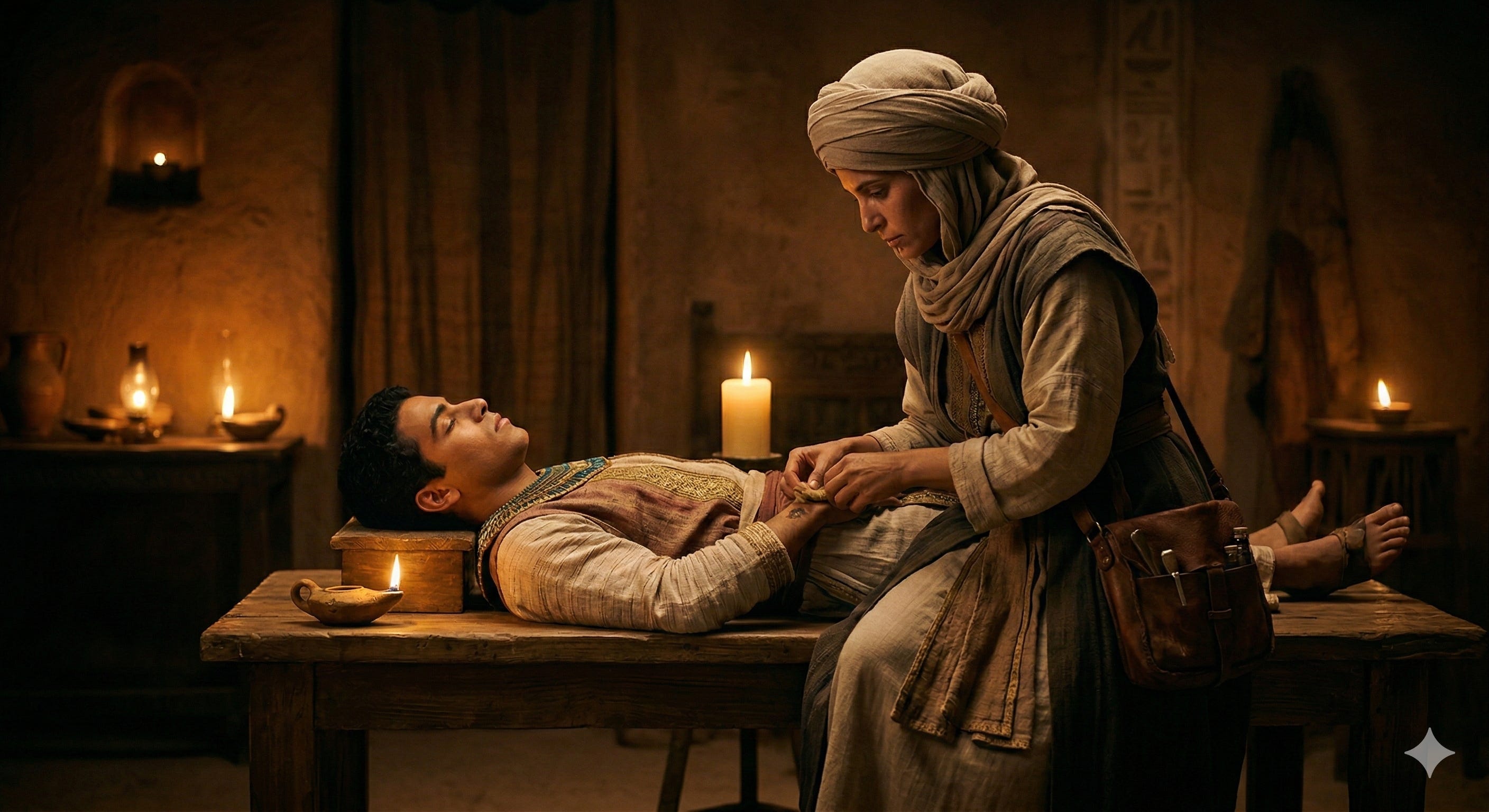
For three days, she tended to the Prince, who lay in a fevered stupor, unable to recognize her. On each day, the Prince was dressed in a different color, and on each day, the princess sang a riddle to him as she fed him the healing soup.
On the first day, the Prince wore black. The princess felt the weight of his mourning and her own journey. She sang:
“You who dressed in cruel black clothes, you multiply my bitter days. Drink, do not drink, let me go back to my city.”
On the second day, the Prince wore red, the color of the blood he had spilled on the glass. The princess sang:
“You who dressed in red as blood, you have dried my tongue and my blood. Drink, do not drink, let me go back to my home.”
On the third day, the Prince wore white, the color of peace and rebirth. The princess sang her final riddle:
“You, the prince who dressed in white, my heart you bite, you are flying my mind out of my head. Drink, do not drink, let me go back to my bed.”
Again, she slipped out unnoticed, leaving a note in a sealed envelope.
Soon after, the Prince stirred, sat up, and began sipping the soup. As he finished the soup, he felt something hard against his teeth. He reached into the bowl and pulled out the ring he had given the princess. The note explained that she was not guilty; it explained to him everything that had happened: the story of the old woman, the oud, the feather, and the treachery of the sisters.
The Prince leapt from his bed, his strength restored. He revealed the truth to his father, and begged to be permitted to wed the Princess.
This story has traveled from door to door, tonight it’s in your home, tomorrow it’s in ours.
For your consideration
What metaphoric “monsters” - obstacles, or the unknown - do you see in this story? Can you find them in your own life as well?
There are similar motifs in this with the Russian story The Feather of Finist the Falcon. It always thrills me to see similarities across cultures.
The story is more complex than I understand at this point.
Jealousy can certainly be a monster, but there is more to it than that.
You might say the monster is patriarchy, overcome by the prince submitting himself to the princess.